27/08/2026 0 Comments
Fracture and Forgiveness: Sermon Series on The Lord's Prayer
Fracture and Forgiveness: Sermon Series on The Lord's Prayer
# Sermons
Fracture and Forgiveness: Sermon Series on The Lord's Prayer
The subject of sin and forgiveness can feel hard, raw, overwhelming, futile and in some way a sticking point for many of us, and yet Jesus told us to pray '‘Forgive us for the fractures we have caused, as we forgive those who have caused fractures in our lives. This sermon, first preached by Sera R in St Denys as part of our Lord's Prayer series, tenderly looks at the reality of sin, the challenge of forgiveness and invites us to consider what might flow from it.
Bible passages: Matthew 6: 9-13, Matthew 18:21-35, Luke 23: 34-43, John 21:15-19
Reading:
*'Fully Alive: Tending to the Soul in Turbulent Times' by Elizabeth Oldfield;
**'Unapologetic: Why Despite Everything, Christianity Can Still Make Sense' by Francis Spufford;
***'Wonderful' a poem by Harry Baker.
Jesus Through Middle Eastern Eyes by Kenneth. E. Bailey
Introduction: A Mountain of 'yes...but'
As we journey through the Lord’s Prayer, we’ve looked at Father, Kingdom, Daily Bread and now ”Forgive us our debts as we have forgiven our debtors” (Matthew 6: 12)
I am very mindful, the subject of sin and forgiveness can feel hard, raw, overwhelming, futile, and in some way a total sticking point to many of us. I came up with a list of at least 10 reasons why people might go ‘yes… but…’ as I spoke on this subject. It can feel like a huge mountain blocking our way ahead.
Today I’ll address some of the tough stuff (which might not be the things you were thinking as tough), as well as some of the beautiful, but a sermon is not the place to speak into everything. I hope I open a door through the mountain, for us to see something of Christ-shaped beauty in this theme, to taste the freedom that comes with forgiveness, and to see what can flow from the freedom (and responsibility) that forgiveness brings.
And with the door open I encourage to talk with someone who can walk with you– a friend, a fellow Christian, a counsellor, a pastoral listener... in the light of your belovedness.
We Humans Mess Things Up
And so we start. Not with forgiveness but sin (cheerful!). Jesus said to his friends and followers: ‘This then is how you should pray… ‘:forgive us our debts as we have forgiven our debtors’ (Matthew 6:9 & 12)
Jesus will have used the Aramaic word ‘Khoba’ in this prayer – which then the gospel writers translated into Greek – Matthew chose a word that means debts– the things you owe people. Luke chose a word that means debts and transgressions. Jesus’ word covered the whole batch - The things that you owe, and the bad that you done. Forgive us for the things we have failed to do that we should, and the lines that we have crossed into wrong-doing.
Sin is not popular to talk about these days in the 21st Century West, it can be viewed as a joke, or as a dangerous label, or just not very relevant. But though we might not talk about it, the lived experience of life is the unrelenting human propensity to [mess] things up (Francis Spufford*).
Elizabeth Oldfield in her book 'Fully Alive'** offers this thought-provoking list, a modern equivalent to medieval 7 deadly sins:
Wrath – polarisation (instead of peace-making)
Avarice – stuffocation (instead of gratitude)
Acedia – distraction (instead of attention)
Envy – status anxiety (instead of belovedness)
Gluttony – numbing (instead of ecstasy)
Lust – objectification (instead of sexual honouring)
Pride – individualism (instead of community)
I wonder what you make of this list. Before we get stuck in thinking yes, that there’s problem out there, I offer you a line from Harry Baker*** who says ‘you cannot be stuck in traffic, without being traffic.’ And note that Jesus offered this prayer to his friends and followers- the implication being that the problem of sin is not just out there, it’s in here. You and I, and we collectively, sin – we have a propensity to mess things up.
Fractured Relationships
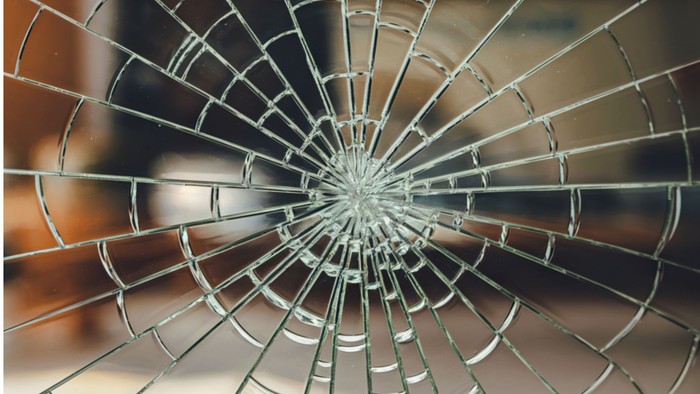
Elizabeth Oldfield also offers the most beautiful description of sin that I have come across: ‘the moment of fracture’. I love this image. The spilt second choice I make, or long-standing fermenting I let brew, in my thoughts, in my actions, in my words, that causes something to quietly or loudly fracture.
And the 'something' that fractures is so often a relationship- with others, with the natural world, with God, with ourselves.
I’ve heard sin described as ‘missing the mark’ but I think that misses an important point. It isolates sin into being just about you or me or an individual. Are we good enough? have we met a certain standard? But the whole thing about sin, according to the whole narrative of scripture, and whole message of Jesus, and our whole lived experience, is this: when we decide to not do the good, or we choose to do the wrong, we fracture relationships- with others, with the natural world (!), and with God.
And relationships matter.
Notice how closely Jesus ties our dealings with God, with our relationship to others. The parable he tells (Matthew 18: 21-35) of the forgiven servant who failed to forgive someone else, brings this point home in a way that is sobering – ‘My heavenly father will treat you like the master who punishes the servant with torture because he doesn’t forgive the smaller debt.’ His words after the Lord's Prayer also reiterate the weightiness. He says 'if you do not forgive others their sins, your faither will not forgiven you yours sins.’ (Matthew 6:14-15)
This is sticky – is Jesus saying our forgiveness is conditional on others, is he saying God is willing to torment and torture people who don’t forgive. Is there a clever way I can wangle out of this? I have not simple answers and ways of deconstructing this within this sermon. However I would say that we always need to place everything in the bigger frame of scripture story and God’s work of redemption. And in this bigger picture, I don’t see a God who celebrates torture, or who makes grace and mercy conditional. But what I do see here is Jesus shouting boldy and loudly, "take this seriously – it’s not an optional extra to forgive a person."
‘Forgive us for the fractures we have caused, and we forgive those who have caused fractures in our lives’ I wonder, where have the moments of fracture been in the past few days, in your relationships with others, with the natural world or God. Where have you caused a fracture? Where have others caused a fracture between you and them or others? It might be uncomfortable, or maybe it’s actually a bit liberating – an honest acknowledgement and seeing of the fractures. But we don’t stay there.
An interlude about our value:
Before we move to forgiveness part, I want to offer this vital truth:
Sin does not define our value or worth. Or anyone else’s. To see yourself or myself as sinner, does not mean that I am worthless or without deep value. Nor is anyone else.
Every human being 1) beloved by God ('God so loved the world', John 3:16), and 2) bearing something of the image of God ('Let us make humans in our image': Genesis 1).
Furthermore 3) (if you have chosen to believe in Jesus) you are also an adopted child of God. Our security is in our belovedness, not in our sinlessness!
And so Jesus invites and implores beloved people in their fractured lives to receive and give the forgiveness he is so keen to offer (so keen he died crying ‘Father forgive them, they don’t know what they do', offering forgiveness without the sinner acknowledging the wrong done)
Jesus Paints Pictures of Forgiveness
Let me paint some pictures of forgiveness from Jesus words, actions and stories:
In the parable of the servants (Matthew 18:21-35) he presents it as wiping the slate clean, nor asking for what is rightly due to you. And there’s a great contrast in the amounts due: The servant owed a due of $10 million dollar. The second servant owed the equivalent of a pound. I am mindful of Psalm 51 where David cries out 'to you Lord and only you have I sinned'. Let’s never lose sight of the fact that no matter how much we fracture and hurt a relationship with others, we do far more fracturing with God. The parable speaks of wiping the slate clean slate is wiped clean. The sinner no longer needs to pay what is due.
Let's look at own lives. Where respect, kindness, thoughtfulness, attentiveness, protection, honouring, love are owed; where you should have been given these and have not been, the slate is wiped clean, and it will not be held against you that you didn’t do it, or give it, or say it. Where others have not given you respect, kindness, thoughtfulness, attentiveness, protection, honouring, love, then Jesus firmly states, you need to wipe the slate clean.
This is a picture of forgiveness.
Another picture of forgiveness: Jesus on the cross dying, and calling out – 'Father forgive them for they don’t know what they do’ - Jesus offering forgiveness in the midst of agony, when no one has admitted they have done wrong. (Luke 23: 34)
Another picture of forgiveness: A breakfast conversation: ‘Peter, do you love?... Feed my lambs... take care of my sheep...feed my sheep’ (john 21:15-17) A second chance being given.
I think these pictures help us imagine forgiveness, which maybe is better starting point than defining it!
Forgiveness is not...
It’s really important here to say what forgiveness is not: it’s not saying ‘the sin doesn’t matter’, nor is it ‘forgetting’. It’s not saying ‘feel free to do it again’, nor is it saying ‘let’s pretend it never happened’. It’s not a feeling of ecstasy, joy and happiness, and it’s not denying there are consequences. And therefore, for some significant sins, working with a counsellor or therapist is really needed.
A simple phrase that maybe helps is this: Forgiveness is saying, I’m not holding the sin against you.’. Or as Elizabeth Oldfield wrote: ‘If sin is the rupture of relationship, forgiveness is the repair’ which comes through saying ‘I’m not holding this against you.’
Let me give one example: I remember working with a couple when I was teacher, and these colleagues totally got under my skin, and they were Christians. I could list all the reasons why I was justified in criticising them and not liking them. Then were causing a whole lot of fractures. And I was getting tangled up in knots about them. But then I realised I needed to forgive them. I needed to stop holding things against them. So I did it prayerfully. In conversation with God. I never told them I did it. But I did it. And things shifted in me. I felt freer, and able to work with them.
Flowing from Forgiveness
Sin is a reality, but it does not define our value. Forgiveness is vital, but it is not an end point. And then things flow from forgiveness. One last quote from Elizabeth Oldfield, 'the concept of sin prevents me from explaining away injustice, forgiveness allows me to find a way through.’
We face the reality of sin, then we sit with God and prayerfully name our forgiveness, and then we see what flows into life.
It might flow into 3 years of sessions with a counsellor, to work through the hurt, the pain and the cost of sin and forgiveness.
It might be breaking all contact with a person, but quietly choosing to let go of the resentment.
It might be rebuilding a broken relationship in a healthy way.
It might be challenging yourself to think differently about yourself or another person.
It might be making a stand for justice or social change, through joining a particular group
It will definitely involve another time of sitting with God and saying ‘forgive me, as I forgive others.’

Comments